The remaining traces of fortification are supposed to belong to a Romanian construction made of wood and earth, located in the Gelu voivodeship. Within this defensive structure there was a Romanesque style church.
In the 13th century, this fortification was transformed into a monastery, becoming the oldest monastic complex in Transylvania, known as the Monastery of Cluj Mănăștur. This monastery represented a powerful institution within the ecclesiastical feudalism and had a significant role in the medieval history of Cluj.
The first written mention of this monastic settlement dates from 1222 and highlights serious conflicts between the Benedictine monks of the monastery and the bishopric of Alba Iulia, with Cluj apparently being the main source of discord. At the same time, the Benedictine abbey was built inside the fortifications and was not under the jurisdiction of the Roman Catholic Bishopric of Alba Iulia, but was directly subordinated to the Archbishop of Esztergom.
In 1241, during the Tatar invasion, the monastery was destroyed, and after their second great incursion in 1285, the monks dispersed.
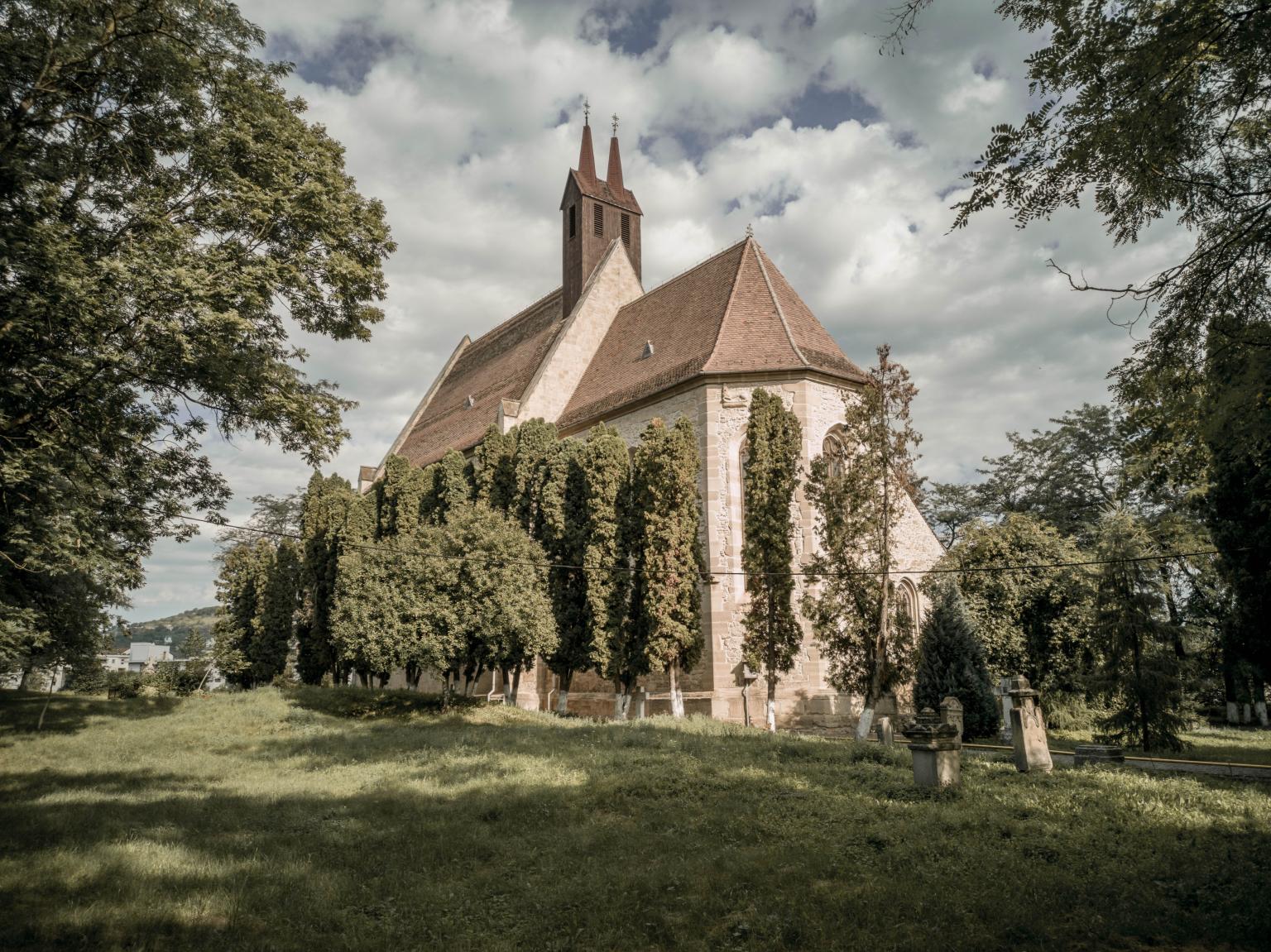
Nothing has been preserved from the original monastic complex of the monastery, except for a sculpture representing a lion, an iconographic motif often found in Romanesque sculpture. This sculpture can be seen under the cornice of the choir wall of the present church, built between 1470 and 1508 in the late Gothic style.
In the vicinity of the chapel, you can still see the mound of earth, a relic of the old defensive system, originally completed with palisades. As it proved ineffective against the Tatar attack, its reconstruction at the end of the 13th century, continued during the next two centuries, aimed to create a strong and durable fortification system. The existence of this system allowed the Gothic church to withstand subsequent sieges.
In 1437, the convent and the chapter functioned here, which confirmed the two agreements between the representatives of the revolted peasantry from Bobâlna and those of the nobility. It was also where Antony the Great of Buda, the leader of the peasant revolt, was killed.
The current church, built after 1896, features elements reminiscent of churches from earlier periods, such as the old church gate, a sundial bearing the name of Abbot Anton, and funerary monuments dating from the 16th to 19th centuries. Of the old constructions, the church choir was preserved, and a simpler nave was added in the 19th century on the old foundations. The area, surrounded by a high mound of earth, reminiscent of the ellipsoidal fortifications of the Middle Ages, had defensive ditches to the south, east and west, while to the north there was a steep natural slope.
Source: City of Cluj-Napoca and surroundings (Ministry of Tourism, 1982)